
Few property markets attract as much commentary as Dubai's — and with commentary comes mythology. Some of it is outdated, left over from the market of a decade ago. Some of it is simply wrong. And some of it contains a grain of truth wrapped in exaggeration.
For an international investor trying to make a clear-eyed decision, the noise is a genuine problem. Misconceptions cause two equal and opposite mistakes: they scare away buyers who would have done well, and they lull others into assumptions that cost them money.
This article takes the most persistent myths about investing in Dubai and tests each against the facts as they stand in 2026. Where a myth is false, we say so plainly. Where it contains a real risk worth understanding, we say that too. The aim is not to sell Dubai — it is to let you assess it accurately.
- Foreigners can own property freehold (100%, no time limit) in 60+ designated areas — established under Freehold Law No. 7 of 2002
- Dubai has no annual property tax, no capital gains tax and no personal income tax — but one-time and recurring fees do apply
- You do not need to live in Dubai or hold residency to invest — purchases can be completed remotely
- Non-residents can obtain mortgages, though typically with larger down payments than residents
- Off-plan purchases are protected by RERA-regulated escrow accounts, in place since 2007
- Not every property appreciates — area selection, developer quality and timing genuinely matter
- The market is no longer a pure speculator's playground — it is increasingly end-user and long-term-resident driven
Myth 1: Foreigners can't really own property in Dubai
This is false, and has been for over two decades. The Freehold Law (Law No. 7 of 2002) opened Dubai's property market to foreign buyers, allowing non-UAE nationals to purchase, sell and lease property in designated freehold zones with full ownership rights — 100% ownership, no time limit, with the right to sell, rent or pass the property on.
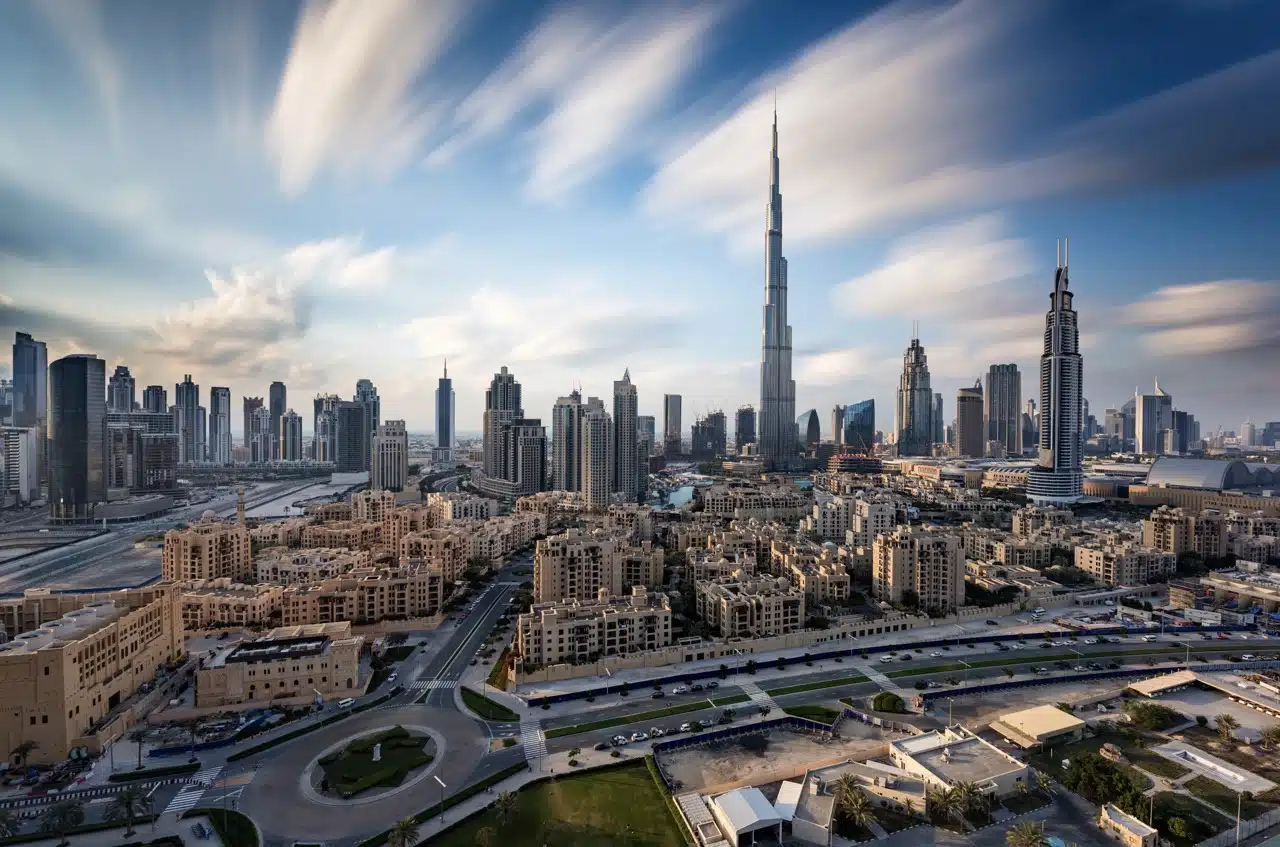
As of 2026, there are more than 60 designated freehold areas where foreigners can buy, including Dubai Marina, Downtown Dubai, Palm Jumeirah, Jumeirah Village Circle, Dubai Hills Estate and Business Bay. Ownership is recorded on a Title Deed issued by the Dubai Land Department and backed by digital records. There is a separate category of leasehold and usufruct arrangements in some older or non-designated areas, but freehold is the standard for modern developments and the default for most international buyers.
The one genuine constraint: you can only buy freehold in designated areas. Verifying that a property sits within a foreign-ownership-eligible zone before paying any deposit is a real and important step — not because foreign ownership is restricted in general, but because it is geographically defined.
Myth 2: You need to be a millionaire to invest
Dubai certainly has a luxury market that generates headlines — but it also has a deep mid-market and affordable segment. Entry-level studios in communities like International City, Jumeirah Village Circle, Dubai South and Discovery Gardens are available at price points far below what the luxury coverage suggests.
Two structural features make the market more accessible than its reputation. First, developer payment plans — many off-plan projects offer plans as low as 1% per month, or post-handover structures that spread payments over years, reducing the upfront capital required. Second, joint ownership and mortgage-backed buying allow investors to enter at a fraction of the full property value upfront.
The myth that Dubai is reserved for millionaires is one of the most counterproductive misconceptions, because it deters exactly the mid-market investors for whom the city's yields are most attractive.
Myth 3: Dubai is completely tax-free, so there are no costs
This myth is half true — and the half that's false costs people money when they fail to budget for it.
The true part: Dubai has no annual property tax, no capital gains tax on residential property, and no personal income tax on rental income. For individual investors, this is a genuine and significant advantage over almost every Western market. It is the foundation of Dubai's strong net yields.
The part the myth gets wrong: tax-free does not mean cost-free. There are real fees that every buyer must budget for.
| Cost | Amount | Type |
|---|---|---|
| DLD transfer fee | 4% of purchase price | One-time |
| Property registration fee | AED 2,000–4,000 | One-time |
| Agent commission | ~2% of price | One-time |
| Housing fee | 5% of annual rental value | Recurring (via DEWA) |
| Service charges | Varies by building | Recurring annual |
| Mortgage registration | 0.25% of loan | One-time (if financed) |
One additional nuance: a 9% corporate tax applies to business activity generating over AED 375,000 annually, which can affect investors holding property through a company structure or running large-scale rental operations — but it does not apply to individuals earning personal rental income. The headline of "tax-free" is broadly accurate for individual investors, but the smart investor budgets the transaction and holding costs precisely rather than assuming zero.
Myth 4: You have to live in Dubai to invest
False. You can invest in Dubai real estate from anywhere in the world without ever living there. Residency is not a prerequisite for ownership. Many investors buy purely for rental income and capital appreciation and never relocate.
The process can be completed remotely. Digital transactions, power of attorney arrangements and virtual property tours mean an international buyer can complete a purchase without being physically present. The Dubai Land Department's digital systems allow ownership verification and registration to be handled efficiently from abroad.
Residency is a benefit that can follow from investment — a property worth AED 2 million or more can qualify the owner for a 10-year Golden Visa — but it is optional, not required. The relationship runs the other way from what the myth assumes: you do not need residency to buy; buying can give you the option of residency.
Myth 5: Non-residents can't get a mortgage
Non-residents can obtain mortgages in Dubai. A number of UAE banks offer financing to overseas buyers, subject to approval. The process involves more documentation and scrutiny than for residents, and the terms differ — most notably, non-residents are typically required to put down a larger deposit than residents, often around 50% of the property value compared to the 20–25% a resident might need.
So while the myth is false, it contains a kernel of reality worth planning around: non-resident financing is available but more capital-intensive upfront and more limited in the range of lenders and products. Investors planning to finance a Dubai purchase from abroad should confirm their borrowing position with a mortgage broker before committing, rather than assuming either that finance is impossible or that it will be on resident terms.
Myth 6: Off-plan property is a gamble
This myth reflects the pre-2008 market, when off-plan buyers carried real delivery risk. The regulatory framework that now governs off-plan sales has substantially changed the picture.
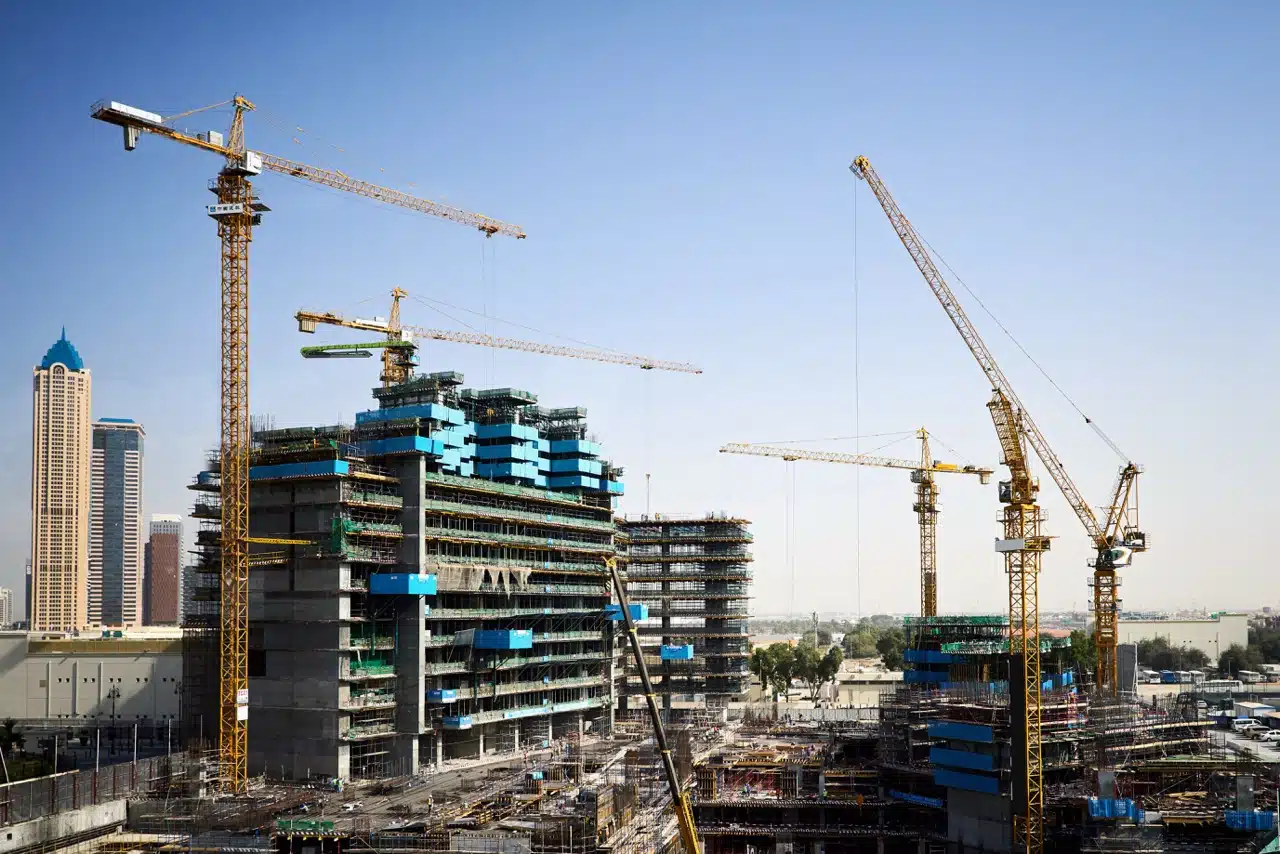
Since 2007, RERA has required developers to hold buyer payments in escrow accounts. Developers cannot freely access these funds — money is released against verified construction milestones. This protects buyers from the scenario the myth describes, where a developer takes deposits and disappears. The project must be registered, and the escrow account verified, before sales can legally proceed.
That said, off-plan is not risk-free, and the honest version of the truth matters here. Delivery timelines can slip. Developer quality varies. The market value at handover can differ from the purchase price. The escrow system protects against outright loss of funds to a vanishing developer — it does not guarantee that any given off-plan investment will perform. Verifying the project registration, the escrow account, and the developer's track record remains essential due diligence.
Myth 7: Property prices in Dubai always go up
This is the most dangerous myth, because unlike the others it encourages bad decisions rather than discouraging good ones.
Dubai's market has delivered strong appreciation — broad market prices rose significantly between 2022 and early 2025. But "the market went up" is not the same as "every property goes up." Different communities perform very differently. Some areas have seen stagnation or decline even during strong overall years. Specific buildings, unit types and locations within the same city can move in opposite directions.
Independent observers, including Fitch Ratings, have noted the possibility of a market correction in the residential sector as supply increases — a normal feature of any maturing market, not a crisis signal, but a reminder that prices move in both directions. The investor who assumes guaranteed appreciation skips the due diligence — area research, supply analysis, developer assessment — that actually determines whether a specific property performs.
Myth 8: The market is just a speculator's playground that will crash like 2008
The 2008 crash is the reference point behind much of the lingering scepticism about Dubai property, and it is worth addressing directly rather than dismissing.
The market that crashed in 2008 was structurally different from today's. It was heavily speculative, lightly regulated, and dominated by short-term flipping with minimal buyer protection. The reforms that followed — RERA oversight, mandatory escrow, stricter developer requirements, and improved transparency through the DLD — were a direct response to those weaknesses.
Today's market is materially more end-user driven. The 10-year Golden Visa has encouraged long-term residency rather than transient speculation. Population growth — Dubai exceeded 4 million residents by late 2025, with the 2040 Urban Master Plan targeting 5.8 million — provides genuine housing demand underpinning the market. This does not make a correction impossible; no market is immune to cycles. But the structural fragility that made 2008 so severe has been substantially addressed. Equating today's market with 2008 ignores nearly two decades of regulatory development.
What actually deserves your caution
Debunking myths cuts both ways. Just as some fears are unfounded, some risks are real and under-discussed. An honest guide names them.
Oversupply in specific segments. Large volumes of new units are delivering in certain communities. In areas with concentrated new supply, short-term rental and price pressure is a genuine risk. Area-level supply analysis matters.
Developer quality varies widely. Escrow protects your funds from disappearing, but it does not guarantee build quality, finish standards or on-time delivery. The developer's track record is one of the most important due diligence items, particularly off-plan.
Service charges differ enormously. Annual service charges vary significantly by building and can materially affect net yield. A high headline rent can be eroded by high service charges. Always check the service charge rate before buying.
Your home country may still tax you. Dubai's tax-free status applies within the UAE. Your country of tax residence may still have claims on your rental income or capital gains. The "tax-free" benefit is real in Dubai but not necessarily complete once your home jurisdiction is considered.
Liquidity is not uniform. Prime, established areas are liquid. Some emerging or oversupplied areas are not. If you may need to exit quickly, factor liquidity into your area selection.
The honest summary
Most of the persistent myths about investing in Dubai are either outdated or simply false. Foreigners can own freehold property outright. You do not need millions, residency or even a visit to invest. Non-residents can finance. Off-plan is regulated and escrow-protected. The market has matured well beyond its 2008 incarnation.
The myths that survive contact with the facts are the ones that contain real, manageable risk: not every property appreciates, supply matters, developer quality varies, and your home country's tax position does not disappear. None of these are reasons not to invest. They are reasons to invest with proper due diligence rather than on the basis of either fear or hype.
Dubai's investment case is strong enough that it does not need mythology to support it — and clear enough that it does not deserve mythology to obscure it. The accurate picture is more useful than either the cheerleading or the scepticism. Approach it with facts, do the due diligence the specific property requires, and the market is exactly as accessible and rewarding as its best advocates claim — for those who look past the myths in both directions.
The information in this article is provided for general guidance and market awareness. Property laws, fees, tax rules and market conditions are subject to change and should be verified against current Dubai Land Department, RERA and official UAE government sources. Tax treatment depends on individual circumstances and your country of tax residence — seek professional tax advice. Information sourced from DLD, RERA guidance and market analysis current as of March 2026. Readers should conduct independent due diligence and seek professional advice before making any investment decisions.