

Everything in Dubai's property market — prices, yields, transaction volumes, developer confidence, investor psychology — ultimately traces back to one number. Not a launch. Not a headline. Not a policy. A population figure.
In 2025, Dubai crossed four million residents. In 2026, that figure is projected to reach 4.7 million by year end. The city is absorbing roughly 175,000–225,000 new residents per year — and each of them needs somewhere to live. This is why serious analysts, from ValuStrat to Savills to the Dubai Land Department, treat population as the single most reliable indicator of where the market goes next.
This article looks at Dubai's population growth as it stands in mid-2026, how it is translating into concrete property demand, which segments are absorbing it, where the pressure points are, and what all of this means for buyers, tenants and investors making decisions in the current cycle.
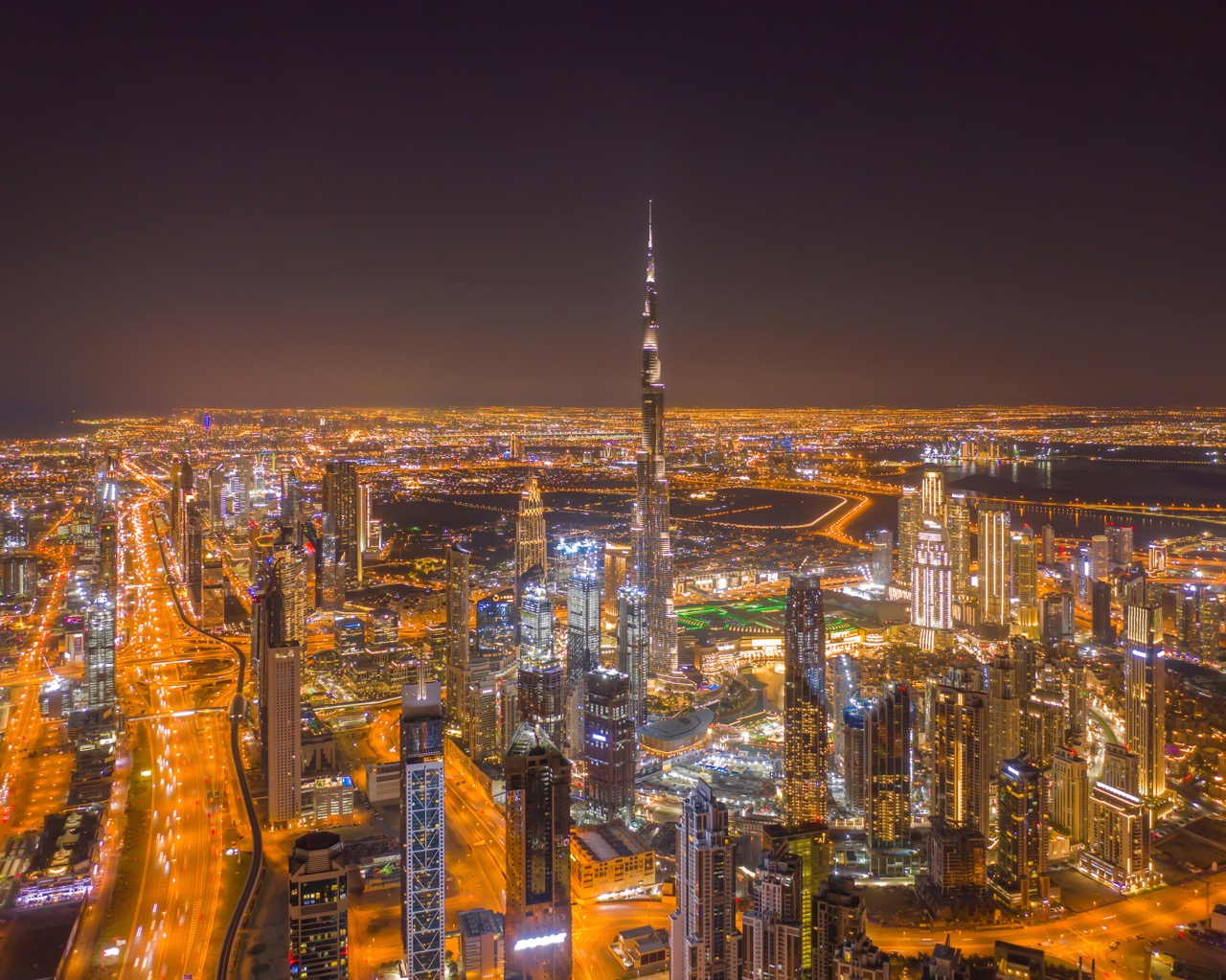
- Dubai's population is projected to reach 4.7 million by end of 2026, with peak-hour population near 6.5 million
- The city added close to 18,000 new residents in a single month by August 2025 — roughly 470 people per day
- 131,234 residential units are forecast for delivery in 2026, mostly apartments
- Villas and townhouses are structurally undersupplied — accounting for less than 20% of Dubai's residential stock while attracting the fastest-growing demand
- ValuStrat forecasts 2026 capital gains of around 10%, moderating from 19.8% in 2025 — with villas expected to rise 17.7% versus apartments at 7.4%
- H1 2026 residential sales reached AED 221.4 billion across 79,281 transactions — a mature market pace, not a slowdown
- The Dubai 2040 Urban Master Plan targets 5.8 million residents — the current growth trajectory is broadly on track
The numbers behind the demographic shift
Understanding Dubai's property market in 2026 starts with understanding what has just happened demographically. According to the Dubai Statistics Center, the population stood at approximately 3.65 million in early 2025 and is projected to grow at a compound annual growth rate of 3.0% to 3.5% — a pace that outstrips many global urban centres and reflects the city's growing economic gravity.
By the end of August 2025, Dubai added nearly 18,000 new residents in a single month, and crossed the four-million threshold soon after. That is roughly 470 new residents entering the emirate every single day, driven by employment growth, business relocation and international migration flows. By some conservative estimates, a further 175,000–225,000 residents will be added during 2026, taking the total toward 4.2 million on the conservative side and 4.7 million on the ValuStrat projection.
Peak-hour population — the total number of people physically present in Dubai during working hours, including commuters and visitors — is projected to approach 6.5 million by end of 2026. This figure matters as much as the resident number, because it drives demand for offices, retail, hospitality and mobility infrastructure that in turn supports residential demand.
The 2040 target is 5.8 million residents. On the current trajectory, Dubai is broadly on course — even accounting for the mild slowdown some analysts are modelling into 2026 due to regional geopolitical uncertainty. The direction of travel is clear, and the property market is being priced around that trajectory rather than around any single year's numbers.
Why this population growth is different from previous cycles
Not all population growth is equal from a property market perspective. What distinguishes the current cycle is the composition of the growth. In earlier phases of Dubai's expansion, migration was heavily weighted toward short-term contract workers and transient professionals. The current wave is materially different.
Long-term visa reforms — particularly the Golden Visa and expanded Green Visa categories — have shifted the arrival profile toward professionals, families and high-net-worth individuals who intend to remain for years or decades, not months. The demand generated by a resident on a two-year contract is fundamentally different from the demand generated by a family on a ten-year Golden Visa. The first tends to rent short-term at the lower end of the market. The second buys, or rents higher-quality stock over multiple lease cycles, and drives demand for schools, healthcare, community infrastructure and larger family homes.
"When Dubai adds close to 18,000 residents in a single month, it has an immediate impact on market activity. We see it in enquiry levels, viewing volumes, and the pace at which well-priced homes transact. This is demand driven by people relocating for work and lifestyle, alongside investors targeting resilient rental income."
Alec James Smith, Head of Residential Sales and Leasing, Savills Middle East
This structural shift is one of the reasons the current cycle is being described by analysts as end-user driven rather than speculative. Off-plan activity dominates transaction volumes — accounting for roughly 72% of residential deals in 2025, according to Dubai Land Department data — but a significant portion of that off-plan buying is by people who intend to occupy the units they purchase, or hold them as long-term rental income assets, rather than flip them before completion.
The supply side: 131,000 units, and why that is not enough for everyone
ValuStrat's 2026 outlook estimates 131,234 residential units will enter the Dubai market during the year. That is a substantial supply pipeline by any measure. The critical detail is what type of units are being delivered — because the answer is: mostly apartments.
Dubai has a structural mismatch between the supply pipeline and the demand composition. Villas and townhouses account for less than 20% of the city's residential stock, but they attract a disproportionate share of the current demand — particularly from families relocating on long-term visas, and from residents transitioning from apartment rentals to permanent ownership. Only around 19,700 new villas were completed by the end of 2025, according to Cavendish Maxwell and Dubai Land Department data, and delivery pipelines in the villa segment remain constrained relative to demand.
The result is a bifurcated market. Apartments are absorbing new supply at a healthy pace, with rental and sale prices growing steadily but not explosively. Villas and townhouses — where supply cannot keep up with demand — are seeing sharper price appreciation. ValuStrat forecasts capital gains of 17.7% for villas and townhouses in 2026, versus 7.4% for apartments. That gap is the direct consequence of population growth colliding with a structurally undersupplied segment.
| Segment | 2026 forecast capital growth | Share of housing stock | Supply outlook |
|---|---|---|---|
| Villas & townhouses | +17.7% | Less than 20% | Structurally undersupplied |
| Apartments | +7.4% | More than 80% | Balanced |
| Overall market | ~10% | — | Moderating from 2025 |
Where the population is going: the community-level picture
Aggregate numbers matter, but investors and buyers need to understand where the population is actually settling — because that determines which communities absorb demand fastest and which lag.
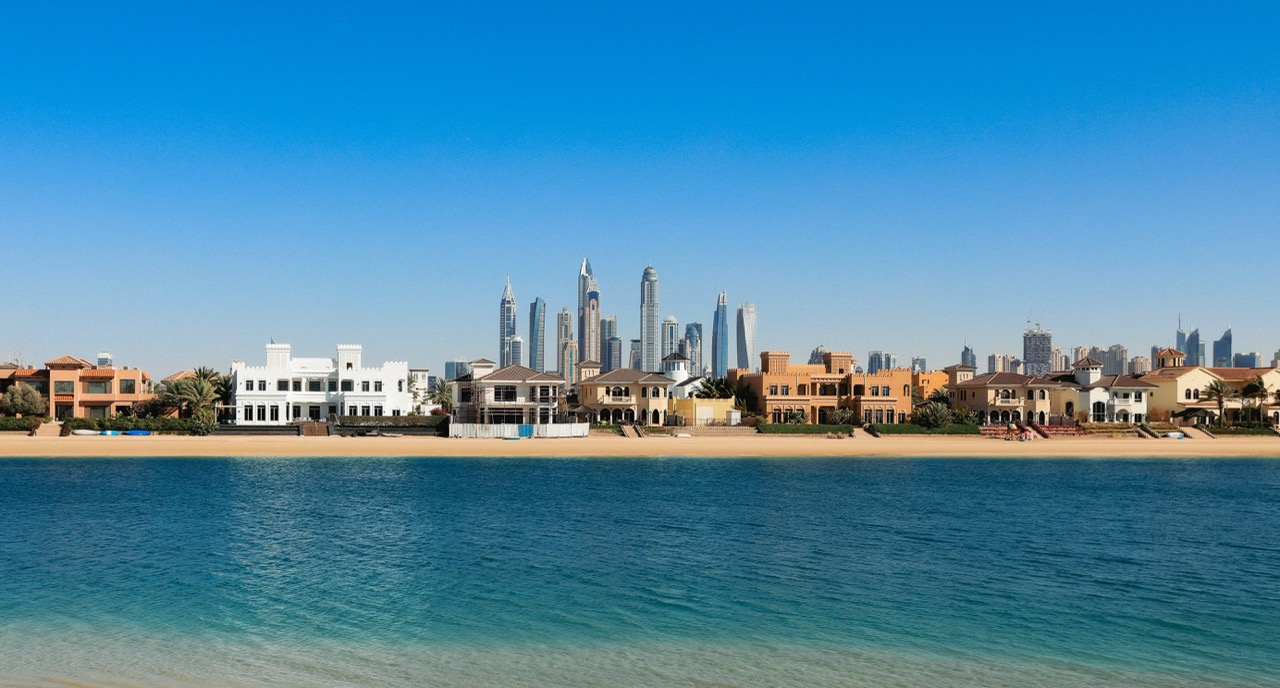
Established communities with mature infrastructure — Dubai Marina, Downtown Dubai, Business Bay, Jumeirah Village Circle, Dubai Hills Estate, Arabian Ranches — continue to absorb the highest volumes of new residents. These are the areas where the schools, healthcare, retail and transport are already in place, and where new arrivals with limited local knowledge tend to gravitate first.
The emerging communities absorbing the second wave of growth are those along the eastern and southern development corridors: Dubai South, Al Warsan 4, Al Furjan, Dubai Silicon Oasis, Dubai Creek Harbour and Jumeirah Garden City. These areas benefit from lower entry prices, active infrastructure delivery, and — critically — the transport connectivity that is being built to serve them. The Dubai Metro Blue Line, opening in September 2029, will fundamentally alter the demand profile of communities like Al Warsan 4 and International City, both of which are already recording strong price growth ahead of station delivery.
Family-focused communities — where the current under-supplied villa demand is concentrated — include Dubai Hills Estate, Arabian Ranches, Tilal Al Ghaf, The Villa and the various Emaar and DAMAC master communities in the southern and central belt. Rental demand in these areas is particularly resilient, with tenant retention rates and lease renewal pricing both trending upward.
What the population effect looks like in the transaction data
The population impact does not stay abstract. It shows up directly in the transaction data.
Dubai recorded a record Dh916 billion in real estate transactions across 2025, with over 270,000 individual sales — the highest annual figures in the emirate's history. Q4 2025 alone recorded transaction value exceeding Dh187 billion, the highest quarterly figure ever. Nearly 6,000 transactions above Dh10 million were completed in 2025, indicating that population growth is now feeding demand at every price point, from mid-market apartments through to ultra-prime residences.
In H1 2026, the pace has moderated somewhat — 79,281 residential sales worth AED 221.4 billion, compared to 91,973 transactions worth AED 262.6 billion in H1 2025. But this is not a decline in demand. It is the natural characteristics of a maturing market: buyers taking longer to make decisions, negotiations becoming more common, pricing performance varying more between communities. The demand base is broader than in any previous cycle, and rental yields remain among the strongest in any major global market.
"Dubai crossing the four million population mark is a clear signal of the city's global appeal and economic momentum. This growth supports a broad base of housing demand, from first-time buyers through to ultra-high-net-worth individuals."
Andrew Cummings, Head of Residential Agency, Savills Middle East — via Khaleej Times, February 2026
The rental market: where the population effect hits first
New residents rent before they buy. This makes the rental market the leading indicator of population-driven demand — the first place the impact of migration flows shows up, before it filters into sales.
Rents across Dubai have risen consistently through 2025 and into 2026, particularly in established communities where new residents are concentrated. Rental yields in Dubai remain high by international standards — apartment gross yields in the 6–8% range are common in mid-market communities, with certain affordable areas like International City still delivering 9–10% gross. This is significantly above the yields available in New York, London, Sydney or Singapore, and it is a direct function of consistent rental demand from a rapidly growing resident base.
The end-user rental profile has also shifted. Long-term visa holders and Golden Visa residents are far more likely to sign multi-year leases, renew at market rents rather than negotiating aggressively, and treat their Dubai property as a genuine long-term home rather than a temporary arrangement. This translates to lower vacancy risk, lower tenant turnover and more predictable income for landlords — precisely the demand profile that makes Dubai one of the strongest yield-based investment markets globally.
What this means for buyers and investors
Population growth alone does not tell you what to buy. But it does tell you what to think about when you do.
Long-term demand is broader than the headline suggests. Dubai is not just absorbing more people — it is absorbing more of the types of residents (long-term family units, professionals on Golden Visas, high-net-worth individuals) that generate deeper and more durable housing demand. Investment thinking should reflect that structural shift, not just the raw growth number.
The villa premium is real and likely persistent. The 17.7% forecast villa growth versus 7.4% for apartments in 2026 is not a temporary imbalance. It reflects a structural undersupply that cannot be fixed in one delivery cycle. If your investment thesis has flexibility on segment, villas and townhouses in mature family communities deserve close consideration.
Emerging communities on infrastructure corridors deserve serious attention. Al Warsan 4, Dubai South, Jumeirah Garden City and Dubai Creek Harbour are all absorbing population growth ahead of major infrastructure delivery. The Blue Line, Etihad Rail, Al Maktoum Airport expansion and Green Wood — these are demand-pulling projects that will attract residents to specific areas. Entering ahead of the visible impact is where the strongest returns historically accrue.
End-user demand supports yield-based investment. The shift from speculator-driven to end-user-driven demand means lower vacancy risk, longer average tenancies and more resilient rents. Investors seeking income rather than pure capital gain are operating in an unusually favourable environment.
Location, quality and connectivity matter more than they used to. A maturing market is a discriminating market. Buyers are more selective, and price appreciation is more concentrated in the strongest properties. Generic exposure to "the Dubai market" is no longer a sufficient strategy — asset selection matters more with each cycle.
What could disrupt the trajectory
Any honest population-based analysis needs to acknowledge the variables that could alter the picture. Population growth is a trend, not a guarantee.
Regional geopolitical tension is the most significant near-term risk. If broader Middle East instability escalates, migration flows could soften — particularly from Europe and East Asia. Some analysts have modelled a scenario where 2026 growth slows to 1–2%, recovering from 2027 onwards. Even in that scenario, Dubai would still add approximately 40,000 new residents in 2026 — enough to sustain meaningful housing demand, but at a slower absorption rate than the baseline.
The supply pipeline for 2026 and 2027 is the second variable. If delivery accelerates faster than population absorption in specific segments — particularly smaller apartments in areas with heavy concentrated launches — short-term rental and price pressure is possible in those pockets. This is why segment and location selection matter. Aggregate market fundamentals can remain strong even while individual segments experience temporary softness.
Global interest rate movements also matter. The UAE Central Bank reduced benchmark rates in late 2025, and this is beginning to feed through to mortgage costs. If the global rate environment shifts materially, that would affect both end-user affordability and the flow of international capital into Dubai property. The current trajectory is favourable — but it is a variable to watch.
The longer view
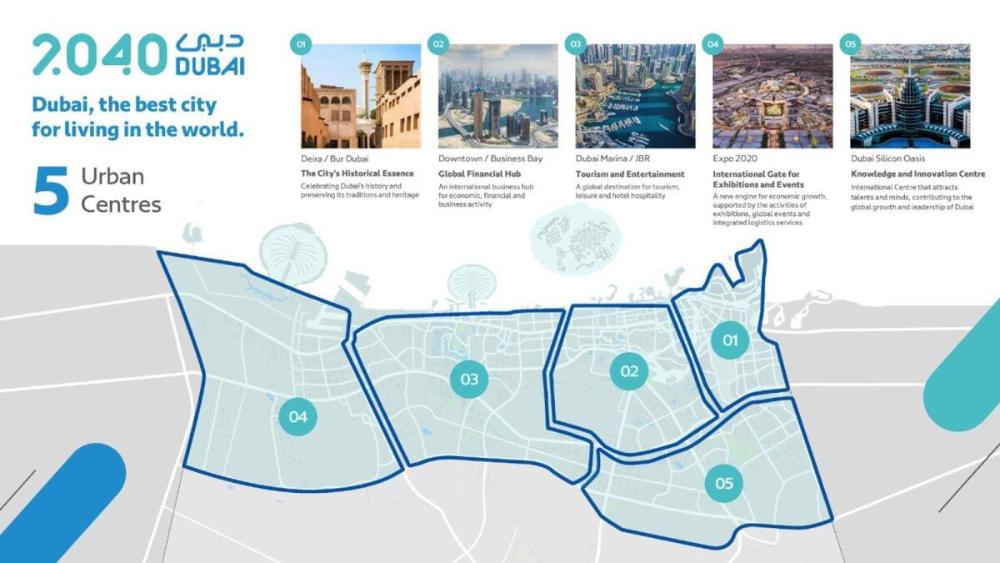
The Dubai 2040 Urban Master Plan targets 5.8 million residents. The current growth trajectory — 4 million achieved in 2025, on track for 4.7 million by end of 2026 — puts that target broadly within reach, even accounting for the geopolitical noise of 2026.
What that means for the property market over the coming decade is straightforward. More residents means more housing demand. More housing demand means sustained absorption of the substantial supply pipeline currently under construction. Sustained absorption means the market has structural underpinning that speculative cycles do not have. The current phase is being described by senior figures at Savills and other consultancies as "end-user driven, structurally supported, quality-focused" — language that reflects a market in a genuinely different position from where Dubai was in 2007, 2013 or 2019.
Population growth is the least glamorous statistic in property investment. It does not make headlines. It does not drive Instagram content. But it is the single most reliable predictor of long-term demand — and for Dubai in 2026, that number is pointing in a direction that supports the residential market for years to come.
The information in this article is provided for general guidance and market awareness. Population and housing statistics are sourced from Dubai Statistics Center, Dubai Land Department, ValuStrat, Savills, Cavendish Maxwell and Engel & Völkers, current as of July 2026. Property price forecasts and growth projections reflect analyst opinion and are subject to change. Rental yields, transaction volumes and market performance vary by community and property type — verify current figures with DLD transaction records before any investment decision. Readers should conduct independent due diligence and seek professional advice before acting on any information in this article.
