
Dubai has a consistent record of turning infrastructure into property value. The Metro did it in 2009. The expansion of Sheikh Zayed Road did it before that. Etihad Rail, with passenger services scheduled to launch in 2026, is positioned to do it again — at a scale the city has not seen before.
This is not speculation. The numbers are already moving. The question for investors and buyers is not whether Etihad Rail will reshape Dubai's residential market. It is whether they are positioned to benefit from it before the broader market catches up.

- Etihad Rail passenger services are expected to launch in 2026, connecting 11 cities across all seven emirates
- Properties near confirmed Dubai stations have already recorded average value increases of 13% over the past nine months
- Dubai South, Al Furjan, Dubai Festival City and Jumeirah Village Circle are among the most closely watched investment corridors
- The rail effect extends beyond Dubai — inter-emirate connectivity is redrawing how investors assess value across the UAE
- Early positioning, ahead of full operational launch, has historically delivered the strongest returns in infrastructure-led markets
What Etihad Rail is and why it matters now
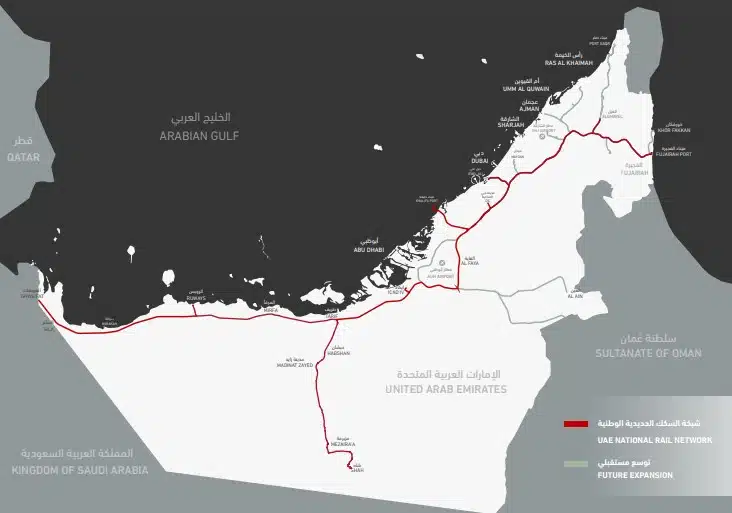
Etihad Rail is the UAE's national railway network. Spanning approximately 900 kilometres, it will connect all seven emirates from Al Sila in the west to Fujairah in the east, linking 11 cities across the country.
Freight operations are already active. The shift that is capturing investor attention now is the approaching passenger phase. In August 2025, Sheikh Mohammed bin Rashid Al Maktoum boarded a passenger train from Dubai to Fujairah — a public demonstration of leadership backing and project readiness that reinforced the 2026 commercial launch timeline.
Once operational, the network is expected to carry around 36.5 million passengers annually by 2030. That volume of daily movement, distributed across connected communities, creates the kind of sustained demand that changes residential property fundamentals — not just at launch, but over years.
The scale is the point. The Dubai Metro transformed a corridor. Etihad Rail connects a nation.
Infrastructure and property value: the pattern that keeps repeating
The relationship between transport infrastructure and residential values in Dubai is well established. When Dubai's Metro first opened in 2009, properties within walking distance of Red Line stations recorded value increases of between 15 and 25% in the years that followed.
Road upgrades along Sheikh Zayed Road produced a similar effect. Accessibility creates demand. Demand creates value. The cycle is consistent enough that serious investors treat confirmed infrastructure projects as leading indicators rather than background noise.
Etihad Rail is the same pattern operating at a different order of magnitude. The Metro served Dubai. This network serves the entire country.
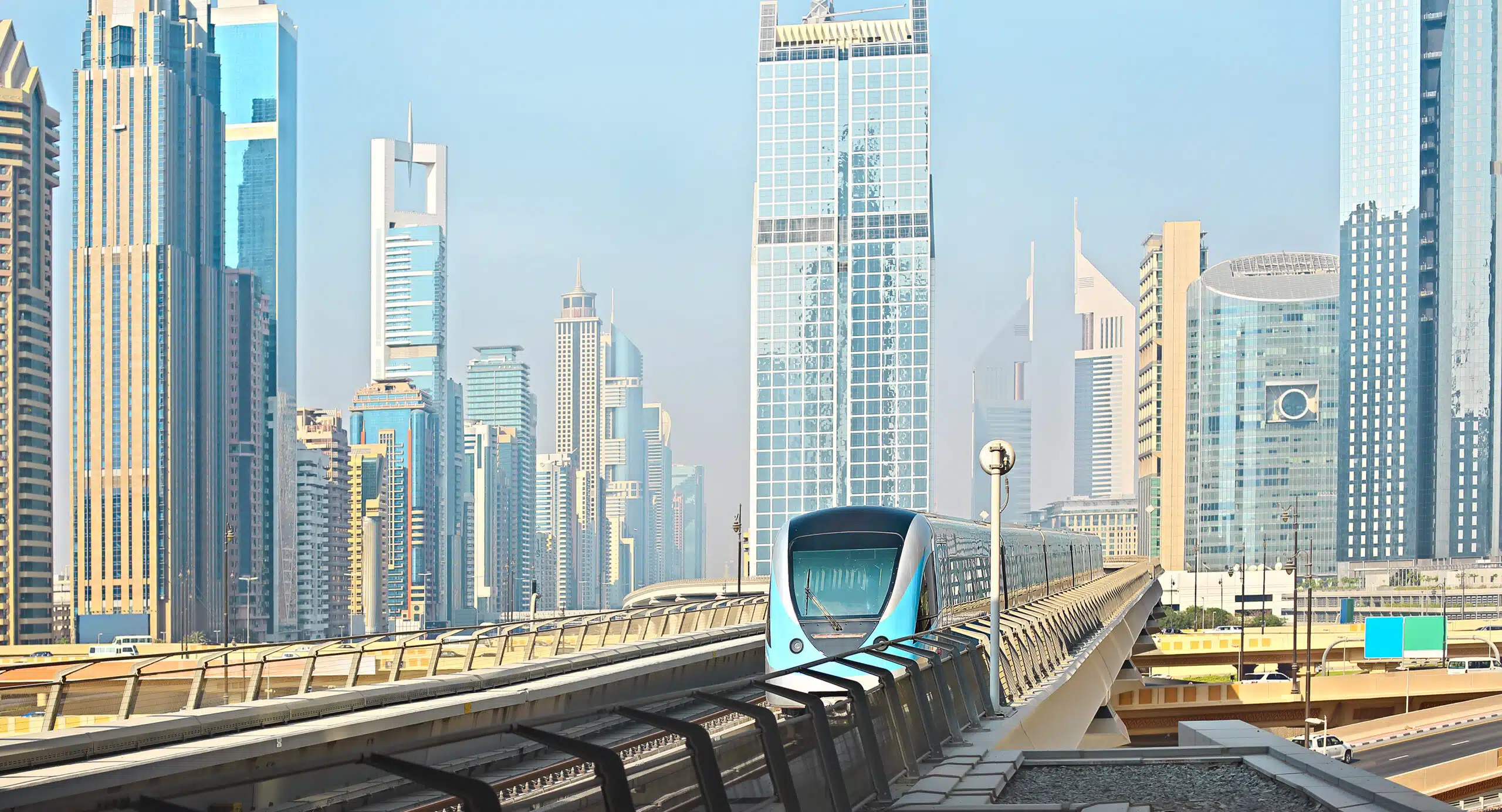
"The sharpest investors in the room aren't looking at the renders. They're looking at the route map."
Rumesh Weragoda, CEO, Lavinia Properties
Al Msaddi cited Japan's Shinkansen bullet train between Tokyo and Osaka, which transformed satellite cities like Nagoya within five years — commercial land values rose over 40%, and housing demand surged more than 60%. The comparison is instructive, not because the UAE will replicate those exact figures, but because it illustrates the compounding nature of high-speed rail connectivity on the communities it reaches.
Where the impact is already being felt in Dubai
The communities generating the most activity are those either confirmed along the route or within logical catchment distance of planned stations.
| Community | Value movement | Rental movement | Profile |
|---|---|---|---|
| Dubai Festival City | +18% | +23% | High momentum |
| Dubai South | +17% | +10% | Long-term play |
| Dubai Investments Park | +17% | — | Emerging |
| Al Furjan | Rising | Rising | Mid-market |
| Jumeirah Village Circle | Active | Active | Volume leader |
| Al Jaddaf | +5–10% | Rising | Layered connectivity |
Dubai South
Dubai South is one of the most closely watched investment corridors in the UAE. With connectivity to Etihad Rail, Al Maktoum International Airport, and major highway upgrades, it is shifting from a long-term masterplan into an active growth zone. Rental demand surged in 2025, with reported increases of up to 10% in recent months.
The appeal here is layered. The rail connection is one part of a wider infrastructure story that includes the eventual relocation of air freight and passenger operations to Al Maktoum International. For investors thinking in five-year horizons, Dubai South represents a rare combination: current affordability and confirmed long-term demand drivers.
Al Furjan
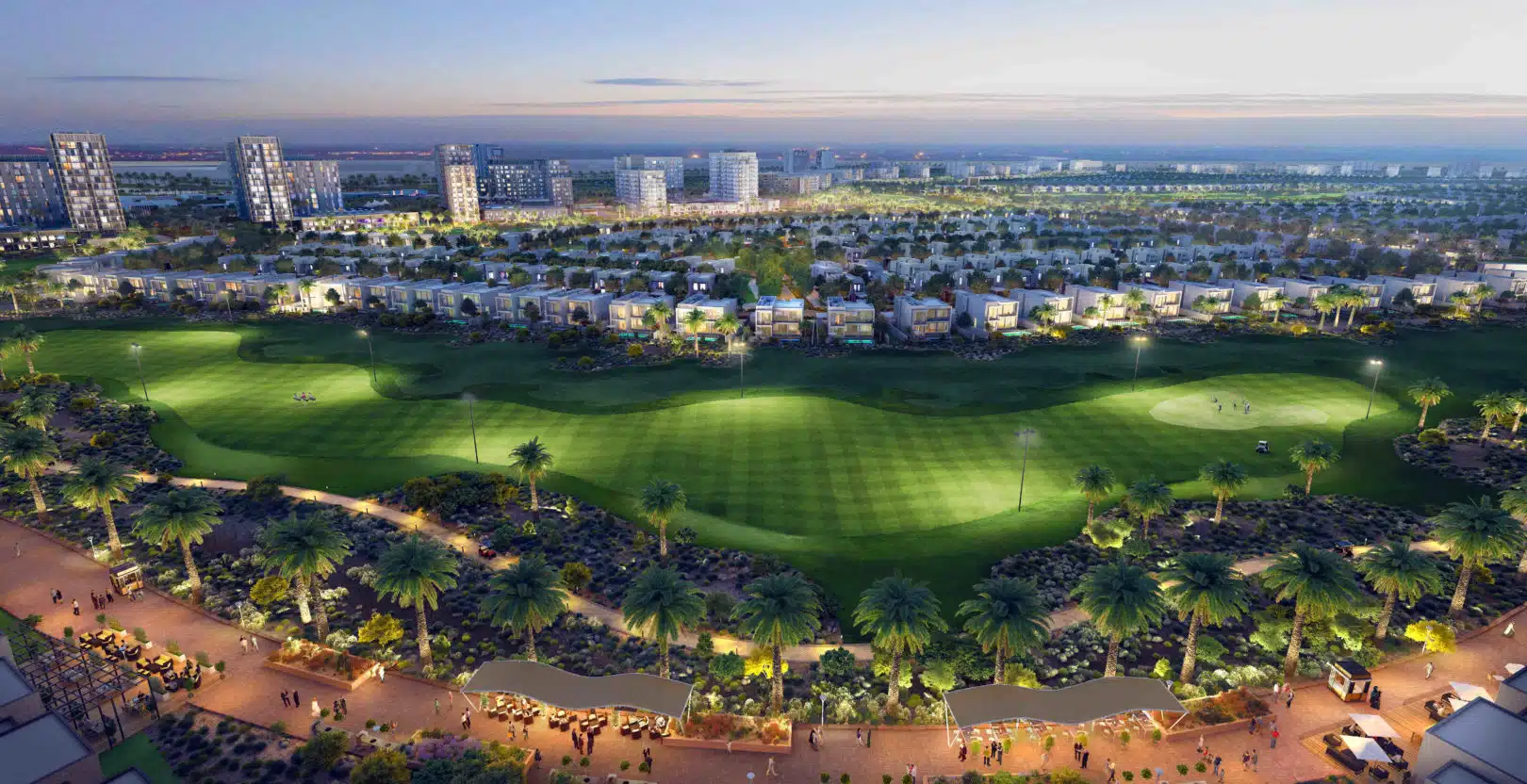
Al Furjan is emerging as a vibrant neighbourhood, balancing community living with accessibility to business hubs. Its position relative to confirmed rail infrastructure has strengthened its case as a mid-market investment option — accessible price points with a credible upside story attached.
Dubai Festival City
Dubai Festival City led value increases near Etihad Rail-connected areas with an 18% surge over the past nine months, alongside rental increases of 23%. That combination of capital appreciation and rental growth in a single corridor is notable. It suggests end-user demand, not just investor speculation, is driving the movement.
Jumeirah Village Circle
JVC led all Dubai communities in Q2 2025 with 4,870 transactions. Driven Properties identifies it as one of the key beneficiaries of Etihad Rail, combining affordability with scale. Volume at that level, sustained over multiple quarters, reflects genuine demand rather than a single catalyst spike.
Al Jaddaf
Already served by a Metro station, Al Jaddaf anticipates price rises between 5 and 10% for larger apartment layouts once rail operations begin. A confirmed Etihad Rail connection would create layered connectivity that few Dubai communities currently offer.
The numbers: what price and rental data shows
Forecasts in a rising market tend toward optimism. The more useful data is what has already happened, rather than what analysts expect.
Homes near Etihad Rail have seen values climb by an average of 13% over the past nine months, according to Betterhomes data. Dubai South and Dubai Investments Park followed Dubai Festival City closely at 17% appreciation in the same period.
On the rental side, Betterhomes reported an overall rental uptick of around 9% near Etihad Rail stations, with projections from Huspy's analysts estimating rental values could increase by 10 to 15% over the next 12 to 24 months.
That last point is worth sitting with. The appreciation being recorded now is anticipatory. Markets move on expectation, not just on delivery. When a 900-kilometre national passenger network goes live, the communities positioned along it do not need to wait for confirmation — the investment case has already been made by the time trains are running.
The inter-emirate effect: what it means for Dubai specifically
Etihad Rail's most significant implication for Dubai's residential market may not be about Dubai at all.
Locations that were once seen as too far from major employment hubs — Ras Al Khaimah, Fujairah, emerging communities in Abu Dhabi and Sharjah — are likely to see an increase in demand for both off-plan and ready homes. As those locations become more viable for residents who work in Dubai, two things happen.
First, buyers who cannot afford Dubai's entry price points gain credible alternatives with genuine connectivity. Second — and this is the more important dynamic for Dubai investors — the city's core and established mid-market communities hold their premium position while benefiting from expanded regional demand.
For Dubai, this is a strengthening story, not a dilution one. A more connected national market raises the ceiling for the country's most established real estate destination.
How to position ahead of the 2026 launch
Infrastructure-led property investment has a well-documented timing dynamic. The strongest returns tend to accrue to those who enter during the pre-completion phase — after confirmation, but before full delivery. That window is narrowing for Etihad Rail.
Station proximity matters, but walkability matters more
Being near a rail station is a positive. Being within comfortable walking distance of a station entrance is a materially different proposition. The premium for walkable connectivity is consistently stronger and more durable than the broader area effect.
Multi-modal connectivity compounds the advantage
Communities where Etihad Rail integrates with existing Metro, bus, or road infrastructure offer a stronger long-term case than those relying on a single transport link. The Jumeirah Golf Estate Metro Station integration is one example of this layered connectivity model.
Off-plan timing in infrastructure corridors is a considered risk
Over 70% of transactions in Q2 2025 in Dubai were off-plan, driven by developer payment plans, branded residences, and lifestyle-led projects. In rail-adjacent communities, off-plan purchases can capture future value — but delivery timelines and developer credibility deserve the same scrutiny applied to any leveraged position.
Rental yield as a holding strategy has merit
For investors not positioned for immediate capital exit, rail-adjacent communities offer an income story while the longer-term appreciation plays out. The rental increases already recorded in Dubai South and Dubai Festival City support that holding thesis.
What investors should be cautious about
Not all proximity is equal. Area-level price increases do not translate uniformly to every building within a postcode. Specific unit type, floor, layout and building quality all determine whether an individual property captures the rail premium or merely sits adjacent to it.
Timelines can shift. The 2026 passenger launch date is the current official position. Infrastructure projects of this complexity have historically moved. Investors building their thesis around a specific launch date carry more timing risk than those focused on the long-term structural change.
Supply context matters. Over 250,000 units are expected to be delivered in Dubai between 2026 and 2027. Rail connectivity is a value driver. It does not override the basic supply and demand arithmetic that affects any individual market. Communities with confirmed rail access and constrained future supply present a stronger investment case.
Evgeny Ratskevich, CEO of Metropolitan Capital Real Estate, noted that property value increases will likely materialise gradually, with the most substantial appreciation expected in new developments near station locations. Patience is part of the investment thesis here, not just entry timing.
The longer view
Every significant infrastructure project in Dubai's history has created wealth for those who understood its implications early and positioned accordingly. The Metro. The Palm. The airport expansion. In each case, the pattern was the same: confirmed infrastructure preceded repriced land values, and the sharpest gains went to those who moved before the consensus caught up.
Etihad Rail represents a structural transformation in how people and goods will move across the country — cutting journey times, easing traffic on highways, and integrating with metro, taxi, and bus systems to create a multi-modal future.
For Dubai's residential market specifically, that transformation means communities that were priced on the basis of their current connectivity are about to be re-evaluated on the basis of their future connectivity. Those are different numbers.
The window between now and the 2026 passenger launch is not unlimited. But it remains open.
The information in this article is provided for general guidance and market awareness. Property values, yield projections and regulatory conditions are subject to change. Readers should conduct independent due diligence and seek professional advice before making any investment decisions. All data sourced from publicly available market reports current as of March 2026.
